
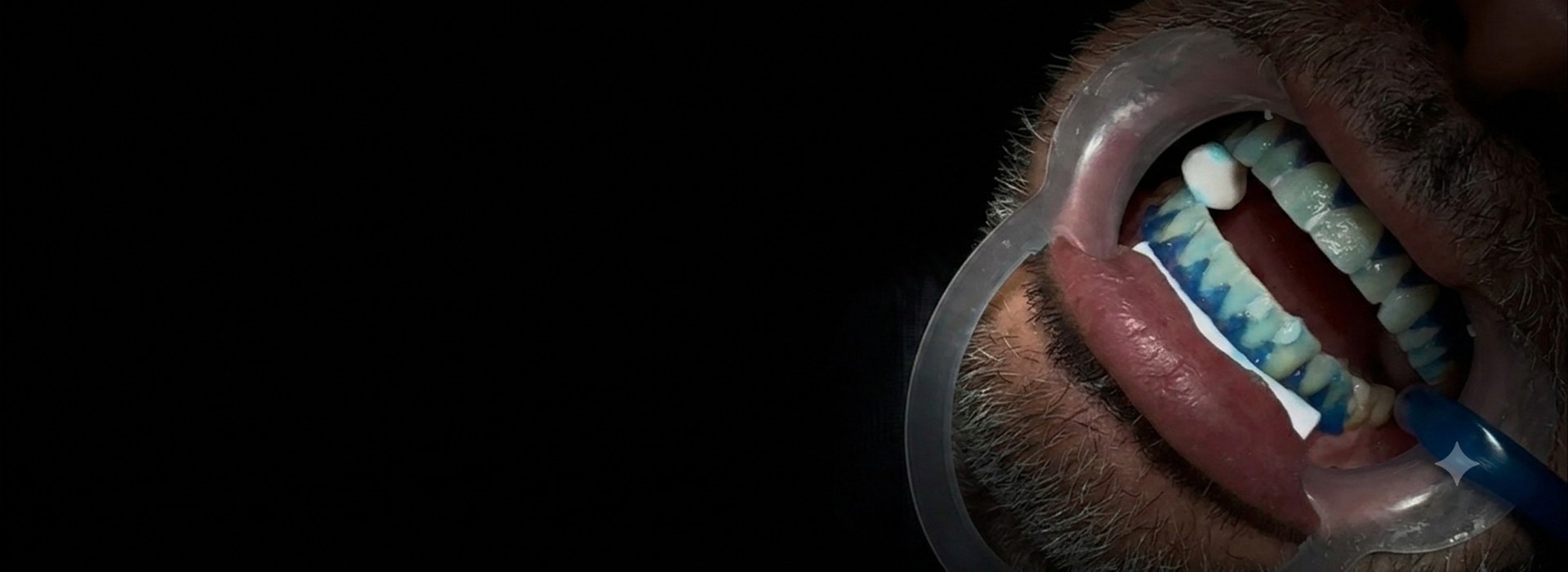
What it is
Professional whitening uses a controlled whitening gel, with the lips and gums protected, to lighten natural tooth enamel.
What it can help with
Coffee, tea, wine, tobacco and ageing can darken teeth. Whitening can improve general colour but cannot change fillings, crowns or veneers.
Not all staining is the same
Knowing where the darker colour comes from lets us tell you honestly what whitening can and cannot correct.
Lifestyle staining
Coffee, tea, red wine, tobacco and some foods deposit pigment on the enamel. These respond best to professional whitening.
Ageing
Enamel thins over the years and lets more of the yellower dentine show through. Whitening lightens this, though the starting point varies from person to person.
Internal staining
Certain medicines, an old injury or a root-treated tooth can darken a tooth from the inside. These cases usually need a different approach, which we explain at the assessment.
How it works
We first confirm that teeth and gums are healthy, protect the soft tissues, apply the gel and give aftercare advice.
In-clinic or take-home: two ways to whiten
We offer both. It is not about which is better in the abstract — it is you and your dentist deciding together which fits your case and your life.
In clinic (LED)
A visible result in a single 60–90 minute session, using a higher-concentration gel applied and controlled by the clinician throughout.
Best if: you want the result now, before an event, or you prefer the clinical team to handle the whole process.
Take-home (custom trays)
You come in first so we can take impressions and make trays moulded to your teeth. We then give you syringes of professional gel to apply at home, at your own pace, following our schedule.
Best if: you prefer to go gradually, you don't mind waiting a little longer, or you want to keep the trays for future top-ups. It also tends to cause less sensitivity.
In both cases the gel is professional-grade and the process is prescribed and supervised by your dentist — never an unsupervised over-the-counter product.
Who it may suit
It may suit adults with healthy teeth who want a visible colour improvement, including before an event or after stopping smoking.
Benefits and limitations
The procedure does not remove enamel. Temporary sensitivity is possible, and the result varies with the starting shade and habits.
The first 48 hours: the "white diet"
What to avoid
Coffee, tea, red wine, cola and dark sauces such as soy or tomato. Don't smoke — tobacco reverses the result faster than anything else.
What to choose
Pale foods: chicken, fish, rice, pasta, potato, dairy and white bread. Water is always fine.
If teeth feel sensitive
It is temporary. Avoid very cold or very hot drinks for the first few days and brush as normal with a non-abrasive paste.
Why Clínica Lubens
We do not whiten over untreated decay or inflamed gums, and we plan around visible restorations so the final smile remains balanced.
Ready for a brighter smile?
Book an assessment: we confirm everything is healthy and tell you what improvement is realistic before starting.
Your clinical team
Your treatment is carried out by clinicians with relevant training and experience. Their languages and professional registration are shown below.
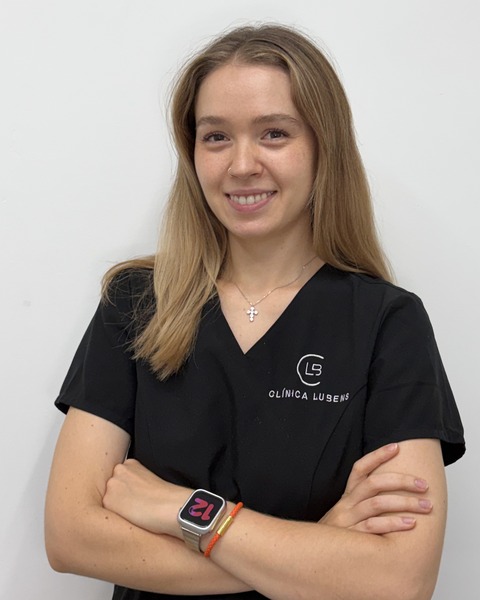
Dra. Yulia Romanenko
- Languages
- Español, Українська, Русский, English
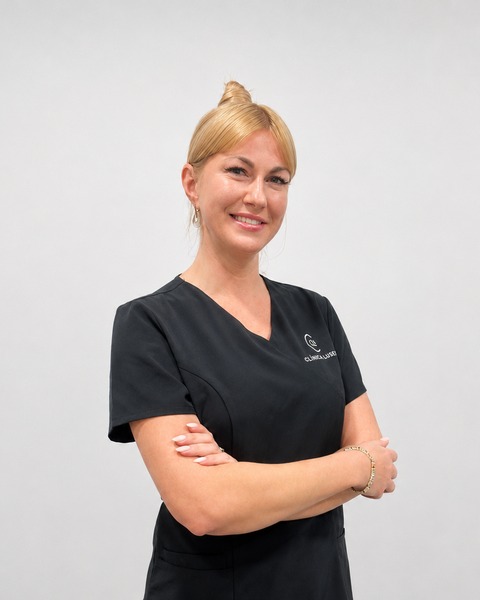
Dra. Anna Pevrukhina
- Languages
- Español, Українська, Русский
- Registration
- COEV 46005634
Common questions
- Does whitening hurt?
- Most people are comfortable, although temporary sensitivity can occur and is discussed before treatment.
- How long does it last?
- Often one to three years, depending on diet, smoking and oral hygiene.
- Will it whiten crowns or fillings?
- No. Whitening changes natural enamel only; visible restorations may need separate planning.
- What is the difference between in-clinic and take-home whitening?
- In-clinic whitening is done in one session with LED light and a high-concentration gel, so the result is immediate. Take-home whitening uses trays made to fit your teeth and a lower-concentration gel that you apply yourself over a few weeks, with our supervision: slower, but gradual and controlled.
- How long do I wear the trays at home?
- It depends on the schedule we give you — usually a few hours a day or overnight, over two to three weeks. We explain the exact plan when we hand over your trays and gel syringes.
- Is take-home whitening as safe as in-clinic?
- Yes, because it is not a generic kit: the trays are made from impressions of your own mouth and the gel is professional-grade, prescribed and supervised by your dentist.
- How much lighter will my teeth get?
- It depends on your starting shade and the cause of the staining. We give you a realistic expectation before we begin rather than promising a result we cannot deliver.
- Is it safe for enamel?
- Yes, when done in a clinic under professional supervision. That is why we start with a check-up: any decay or gum inflammation is treated first, because whitening an unhealthy mouth is not safe.
Your assessment at Clínica Lubens
- We listen to what is bothering you and review the relevant history.
- We examine your mouth and recommend imaging only when needed.
- You receive clear options and a written estimate before deciding.