
What it is
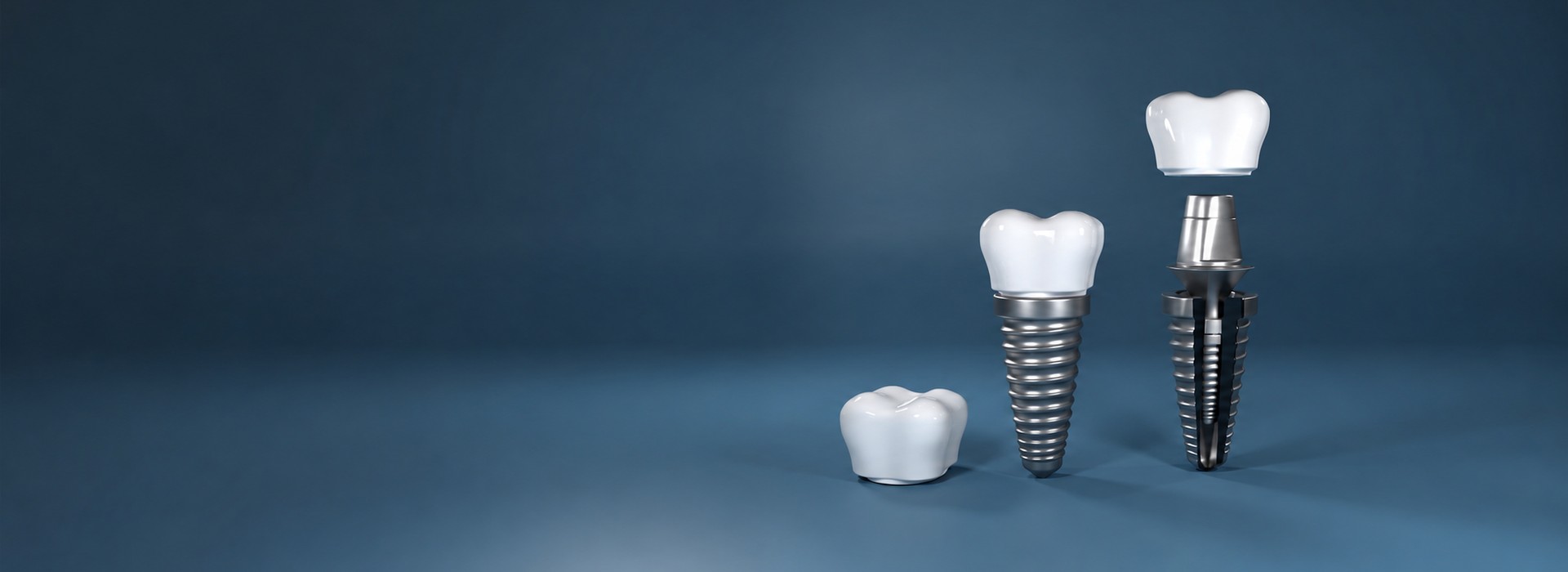
A dental implant is a titanium fixture placed in the jaw to support a custom crown, replacing a missing tooth without preparing neighbouring teeth.
What it can help with
It can restore chewing, close a visible gap and help maintain function after a tooth has been lost or cannot be saved.
It is not only about appearance
A gap does not stay still: the mouth reorganises around it, and not for the better.
Teeth drift
Neighbouring teeth tend to tilt into the gap and the opposing tooth over-erupts, gradually altering the bite.
Bone resorbs
Without a root to stimulate it, the bone in that area progressively loses volume. The longer you wait, the more complex the solution.
Chewing unbalances
Always chewing on the good side overloads that area and, in some cases, the jaw joint.
An implant halts this because it also replaces the root — something a bridge or a removable denture cannot do.
How it works
Assessment includes examination and imaging, followed by implant placement, healing and fitting of the final zirconia crown when integration is stable.
Implant, bridge or removable denture
Implant
Replaces the root, leaves neighbouring teeth untouched and preserves bone. The most durable option, but it needs sufficient bone and several months.
Bridge
Faster and sometimes cheaper, but it requires preparing the adjacent teeth and does not prevent bone loss beneath the gap.
Removable denture
Useful for larger gaps or as a temporary solution. Less stable when chewing and requires a period of adaptation.
At the assessment we show you the options that actually apply to your mouth, with timescales and costs, so you can decide with clear information.
Who it may suit
Implants may suit adults with adequate health and bone, or patients for whom bone regeneration is clinically possible.
Benefits and limitations
They are fixed and independent of adjacent teeth, but they require surgery, healing time, excellent hygiene and ongoing professional maintenance.
Your recovery, stage by stage
First few days
Mild discomfort and swelling, controlled with the prescribed regime. Intermittent cold, soft diet, no smoking and no intense exercise.
Following weeks
The gum heals and you return to normal life. Careful hygiene around the area and check-ups to confirm everything is progressing well.
3–6 months
The implant integrates with the bone. Once we confirm integration is sound, we fit the definitive crown.
Why Clínica Lubens
You receive a written plan with stages and costs. Finance may be available for up to 24 months, and we can review a comparable insurer or clinic quote.
Want to know whether an implant is viable in your case?
We review your X-ray, the state of your gums and the available alternatives, and you leave with a clear proposal, timescales and a written estimate.
Your clinical team
Your treatment is carried out by clinicians with relevant training and experience. Their languages and professional registration are shown below.

Dr. Alejandro Cordero
- Languages
- Español, English, Português
- Registration
- COEV 46005753

Dr. Julio García Algarra
- Languages
- Español, English
- Registration
- COEV 46005026
Common questions
- Does implant surgery hurt?
- It is carried out under local anaesthetic. Mild discomfort or swelling can occur during the first few days.
- What if I do not have enough bone?
- It does not always rule out treatment. Imaging helps determine whether regeneration or a different option is appropriate.
- Can I finance treatment?
- Eligible implant plans may be financed for up to 24 months, subject to approval and the provider’s terms.
- Can you match another quote?
- Bring the full plan. We will do our best to match a genuinely comparable proposal with equivalent treatment and materials.
- How long does the whole process take?
- Between 4 and 8 months including integration of the implant. The surgery itself is a single day, and initial recovery only a few.
- How long does an implant last?
- With good hygiene and regular check-ups, decades. What determines its lifespan is not the titanium but the health of the gum around it.
- Will I be left without a tooth during the process?
- Not necessarily. In many cases we fit a temporary solution so you are not left with a visible gap during integration. We confirm this at the assessment.
- Can I have an implant if I smoke?
- Yes, but smoking significantly reduces the success rate. We explain that with the evidence and without judgement, so you can decide with the real information in front of you.
Your assessment at Clínica Lubens
- We listen to what is bothering you and review the relevant history.
- We examine your mouth and recommend imaging only when needed.
- You receive clear options and a written estimate before deciding.