
What it is
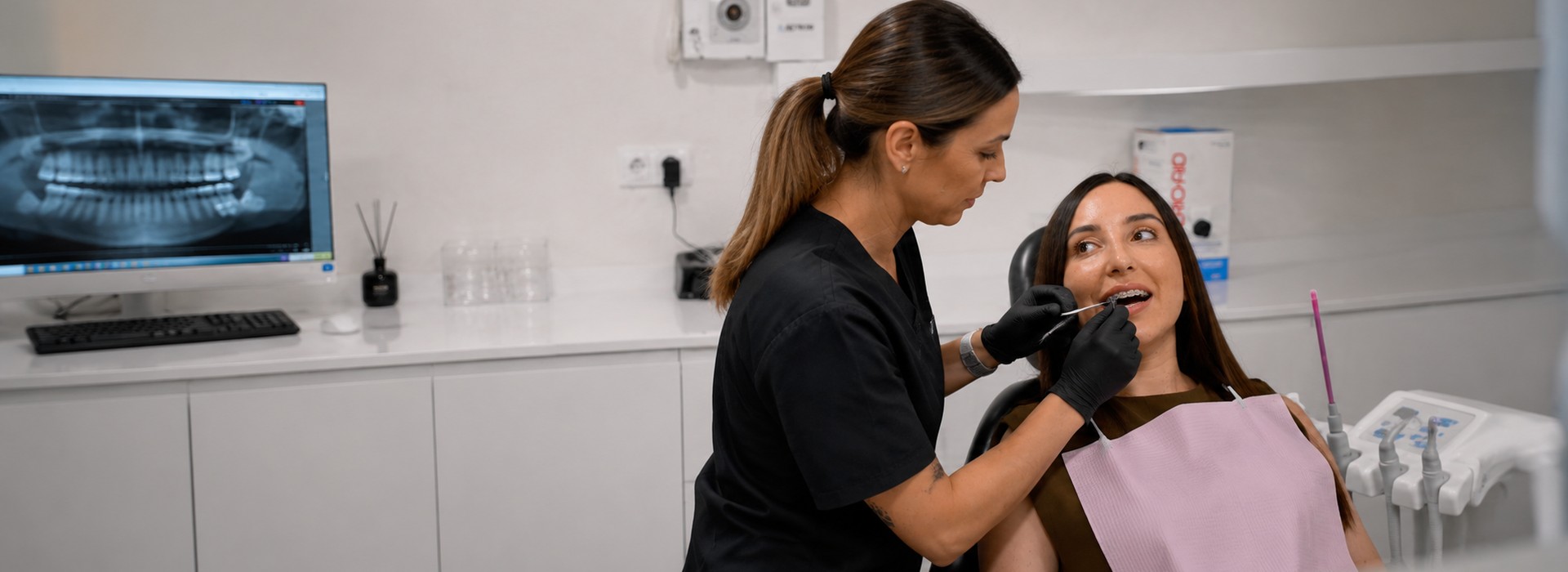
Orthodontic treatment with fixed braces remains, in many cases, the most effective way to move teeth into their ideal position. We recommend it when the case calls for it or when it fits your budget better — not as a default.
What it can help with
It corrects crowding, malocclusion, spacing and rotations, all of which affect not just appearance but how chewing forces are shared and how easy the mouth is to keep healthy.
Appearance, yes. But function too.
A well-aligned bite distributes chewing forces and makes it far easier to keep the mouth healthy for decades.
Crowding
Overlapping teeth that make cleaning difficult and encourage decay between teeth and gum inflammation.
Malocclusion
Deep bite, open bite or crossbite: these wear enamel unevenly and overload particular teeth.
Spacing and rotations
Diastemas or rotated teeth that affect both the look of the smile and how the bite is shared.
How it works
We carry out a full study of your bite, fit the brackets and first archwire, then adjust every four to six weeks until the plan is complete, finishing with retainers.
The types of braces we offer
Metal brackets
The most efficient and economical option, with maximum control of movement. Robust and suitable for any degree of complexity.
Ceramic brackets
Tooth-coloured and far more discreet at conversational distance. Same working principle, with a more aesthetic finish.
If discretion is your main priority, it is also worth considering clear aligners with Invisalign®.
Who it may suit
It suits moderate to complex crowding or malocclusion, patients who prefer a fixed solution that does not depend on daily discipline, and anyone looking for the most economical orthodontic option.
Braces or aligners: which suits you
Braces suit you better if…
Your case needs complex movements or a lot of control; you prefer a fixed solution that does not rely on daily discipline; or budget is decisive.
Aligners suit you better if…
Discretion is your priority; you value being able to remove them to eat and brush; and you can commit to wearing them 22 hours a day.
We offer both options, so we have no incentive to push you towards either. We tell you what your case needs.
Benefits and limitations
Braces offer maximum control and work regardless of patient consistency, but they are visible, demand more careful hygiene and can cause mild discomfort for a few days after each adjustment.
What to expect during treatment
The first few days
A feeling of pressure and some rubbing on lips and cheeks while you adapt. The orthodontic wax we give you helps a great deal in this phase.
After each adjustment
Two or three days of mild discomfort, managed with ordinary painkillers and by eating softer food for that period.
The rest of the time
Completely normal life. The routine comes down to more careful cleaning and avoiding certain hard or sticky foods.
Brush after every meal, use interdental brushes, and let us know promptly if a bracket comes loose or a wire slips — it is a quick fix, but not something to leave for weeks.
Why Clínica Lubens
We offer both braces and aligners, so we recommend the one your case needs. You get a fixed written quote and a duration estimate before anything starts.
Braces or aligners? We will help you decide
We study your bite and explain which option fits your case, with an estimated duration and a written quote.
Your clinical team
Your treatment is carried out by clinicians with relevant training and experience. Their languages and professional registration are shown below.
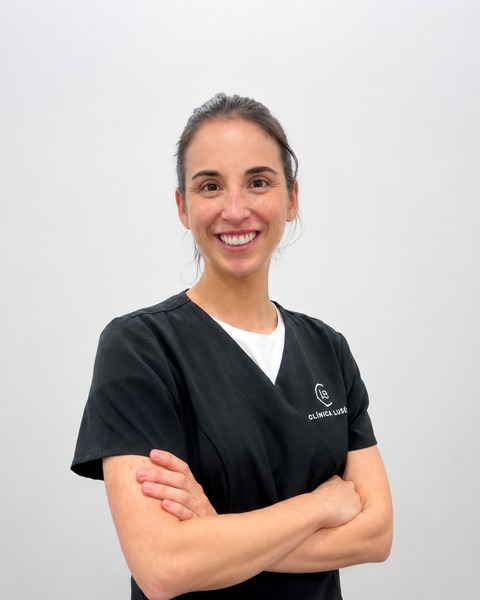
Dra. Macarena Remohi Martínez-Medina
- Languages
- Español, English
- Registration
- COEV 46004282
Author: Nico Díaz · Editorial coordination
Clinically reviewed by: Dra. Macarena Remohí Martínez-Medina
Reviewed 27/07/2026
Common questions
- When are braces recommended instead of Invisalign?
- In more complex cases of tooth movement, when maximum control is needed, or when budget is a decisive factor. We assess this at your first visit.
- Are braces visible?
- Yes, although we offer aesthetic tooth-coloured ceramic options that are considerably more discreet than traditional metal.
- Does fitting braces hurt?
- Fitting them does not hurt. There can be mild discomfort in the first days after each adjustment, manageable with ordinary painkillers, usually settling within two or three days.
- How long does treatment take?
- Between 12 and 24 months depending on complexity. At the assessment we give you an estimate for your specific case, including the adjustments it will need.
- How often do I need to come in?
- Every four to six weeks for adjustments. These are short appointments where we check the movement is progressing as planned.
- Are there foods I should avoid?
- Yes: very hard or sticky foods (ice, whole nuts, chewy sweets) can dislodge a bracket. We give you the full list at the start.
- Is cleaning harder with braces?
- It needs more attention, yes. We teach you the technique and the right interdental brushes: keeping the gums healthy during treatment matters as much as the movement itself.
- What happens at the end?
- We remove the brackets and fit retainers. Without retention teeth tend to return towards their previous position, so it is an essential part of the treatment.
Your orthodontic assessment at Clínica Lubens
- We examine your bite, tooth position and gum health.
- We explain whether aligners, braces or simply monitoring suits you best.
- You receive a realistic duration estimate and a written quote.