
What it is
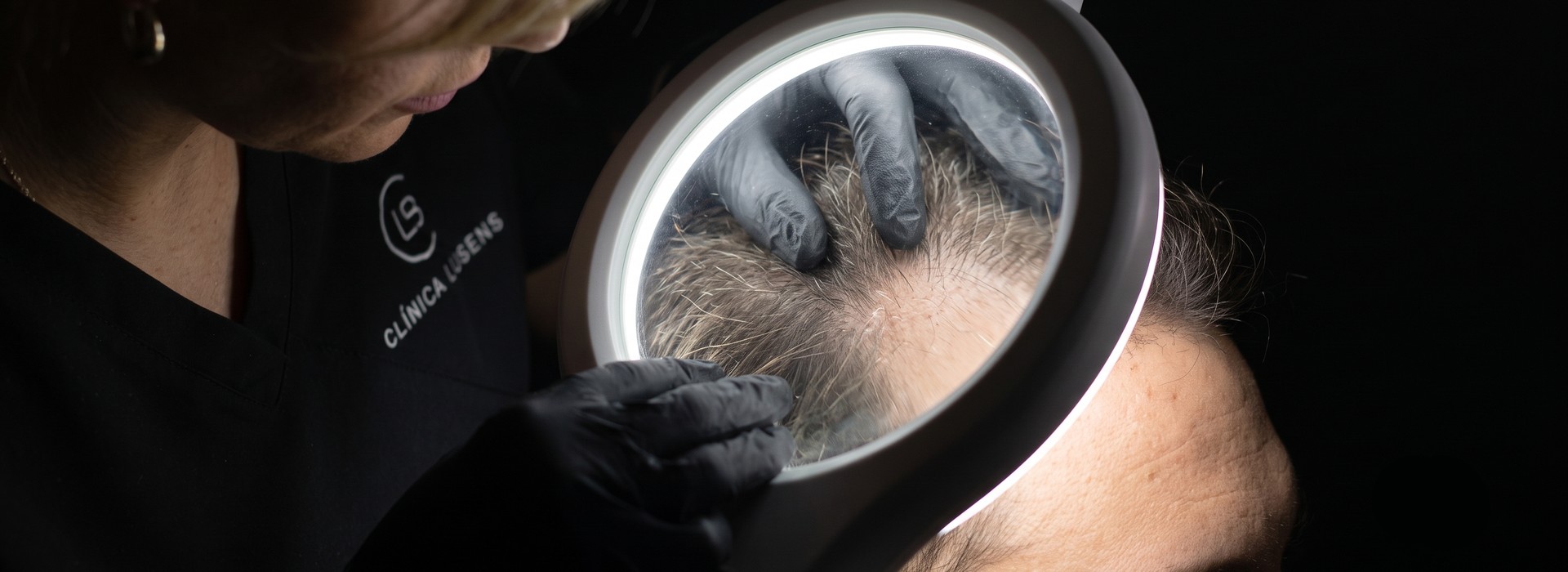
We offer medical treatments to slow hair loss and improve density, mainly through scalp PRP and mesotherapy, combining your own plasma or specific active ingredients according to your case.
What it can help with
The difference from a cosmetic product is substantial: here there is a prior diagnosis, medical application and genuine follow-up of how things progress.
The techniques we use
They are chosen — or combined — according to what the scalp examination reveals.
Scalp PRP
A small blood sample is taken, centrifuged to concentrate the growth factors and applied to the scalp to stimulate the weakened follicle.
Indicated for: diffuse shedding and weakening of existing hair.
Hair mesotherapy
Micro-injections of vitamins, amino acids and specific actives directly into the area, to nourish the follicle and improve the scalp environment.
Indicated for: fragile, brittle hair or hair with a nutritional deficit.
How it works
We assess the scalp and the type of shedding, review your history and possible underlying causes, choose the technique and apply it with micro-injections in 30–45 minute sessions.
What it can and cannot achieve
It can
Slow or reduce active shedding, strengthen and thicken existing hair, improve scalp health and preserve what you still have.
It cannot
Repopulate areas of established baldness where the follicle has disappeared. That requires a hair transplant, which we do not carry out.
This distinction is the most important point on this page: the earlier you act, the more hair there is to preserve.
Who it may suit
It suits hair weakening or shedding in its early stages, anyone wanting a non-surgical medical approach, and people who want to strengthen and keep the hair they still have.
Benefits and limitations
It is a medical approach with real follow-up, without surgery or social downtime, and it is compatible with prescribed hair medication. But it works best in early stages and does not repopulate areas of established baldness.
How the result develops
First month
No visible change yet. The hair cycle is slow and this phase is normal — it is worth not losing heart.
2–3 months
The first thing you notice is less shedding: less hair in the brush and in the shower. That is the first sign it is working.
3–4 months
Perceptible improvement in density and thickness. This is when we objectively assess the result and decide on maintenance.
Habits that help: wait 24 hours before washing your hair after each session, be consistent with the protocol, watch for deficiencies in iron, vitamin D or protein, and keep any prescribed hair medication — these treatments complement it rather than replace it.
Why Clínica Lubens
We assess the scalp honestly before proposing anything — including telling you when it is not the right moment — with a personalised protocol and realistic timescales.
Noticing more hair loss than usual?
The sooner it is assessed, the more hair there is to preserve. We examine your scalp and tell you honestly whether you are a candidate.
Your medical team
These treatments are carried out by doctors with specific training in aesthetic medicine. Their languages and professional registration are shown below.
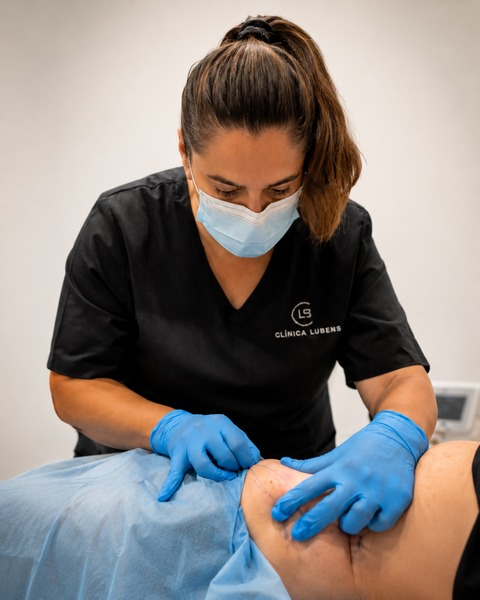
Dra. Alba Gómez Martínez
- Languages
- Español
- Registration
- ICOMV 460311525

Dra. Angie Paola Gonzalez Niño
- Languages
- Español
- Registration
- ICOMV 464628862
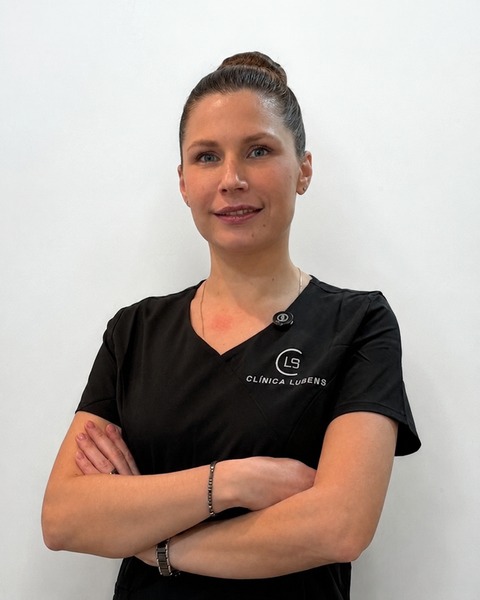
Tatiana Simonova
- Languages
- Español, Русский, Українська
Author: Nico Díaz · Editorial coordination
Medically reviewed by: Dra. Alba Gómez Martínez
Reviewed 27/07/2026
Common questions
- Does it work for any type of hair loss?
- It is most effective in the early stages of hair weakening. At the consultation we assess whether your case is suitable or whether it should be combined with other options. In areas of established baldness there is no follicle left to stimulate.
- How many sessions are needed?
- Usually an initial protocol of 3–4 sessions spaced three to four weeks apart, followed by maintenance roughly every six months, with review of how the hair is responding.
- Is it painful?
- Topical anaesthetic is used where needed; discomfort is usually minimal. The scalp is sensitive, but the micro-injections are very superficial and the session is short.
- When are results visible?
- Between 2 and 4 months. First you notice less hair falling, and only afterwards do density and thickness improve. The hair cycle is slow and cannot be rushed.
- Is it the same as a hair transplant?
- No. These treatments strengthen and preserve the hair you still have; they do not repopulate areas without follicles. We do not perform hair transplants, and we will tell you if your case requires one.
- Can I combine it with minoxidil or other treatments?
- Yes, and it is often advisable. These treatments do not replace prescribed medication: they complement it. Tell us what you already use so we can plan together.
- Does it help hair loss after pregnancy or from stress?
- With acute shedding (postpartum, stress, anaemia) the priority is treating the cause; many cases recover on their own. Treatment can help speed recovery, but we will tell you if it is simply better to wait.
- Can I wash my hair afterwards?
- It is best to wait 24 hours. After that, normal hygiene and routine. We only ask you to avoid dyes, harsh products, sauna and intense exercise on that first day.
Your assessment at Clínica Lubens
- We assess your case and listen to what you would like to improve.
- We explain what is realistically achievable — and what is not.
- You receive a clear written quote, with no obligation.